


Rafting in Jasper with Kids: 2026 Family Guide
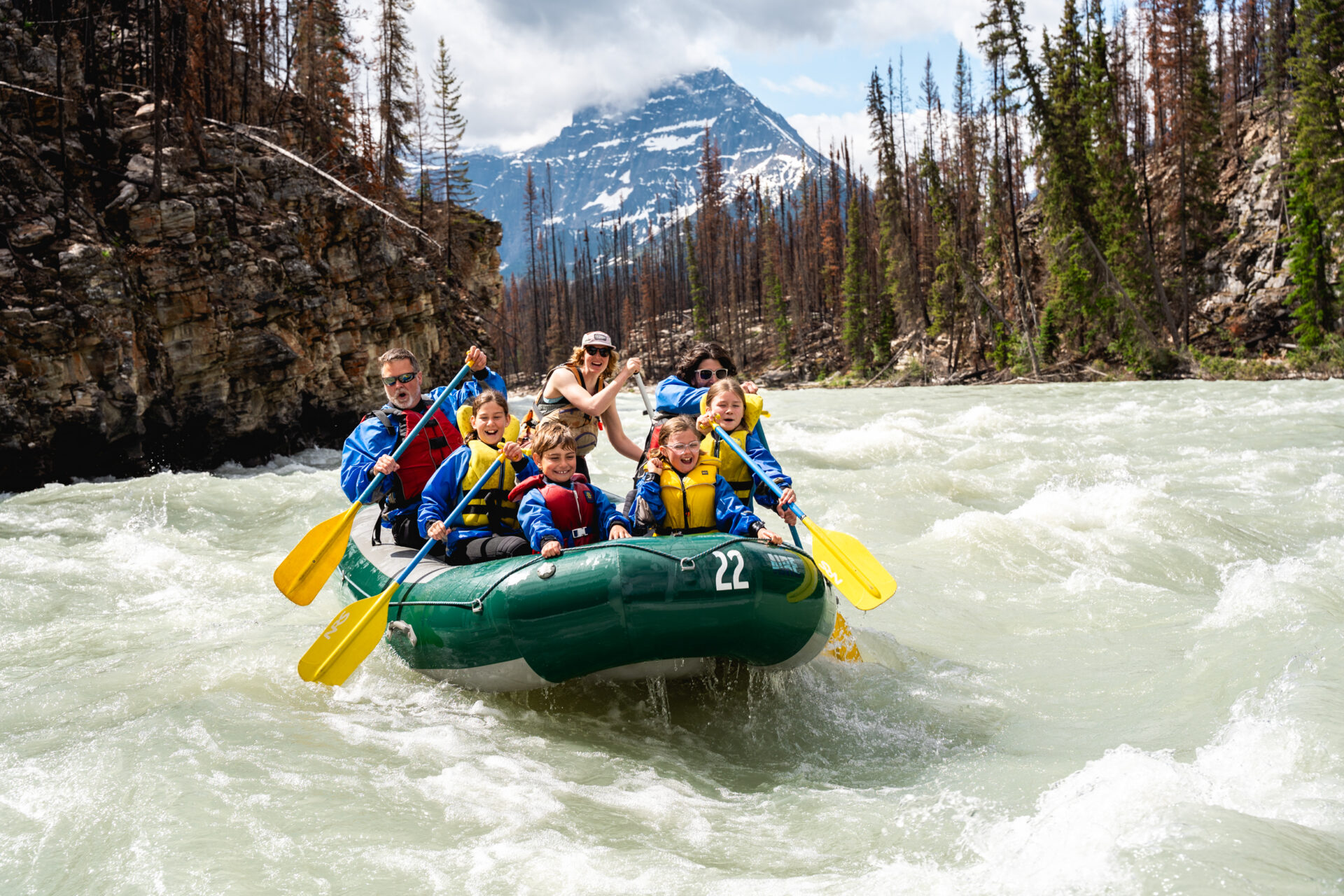
Some of the most memorable trips we have ever guided have involved kids who were convinced they were about to have the worst day of their lives. By the time the raft touches the water an hour or so later, those same kids are standing at the takeout asking if they can go again. Rafting in Jasper with kids is genuinely one of the best family activities in the Canadian Rockies, and after more than 50 years on this river, we can say that with complete confidence.
That said, families come to us with real questions before they book. What age is old enough? Is the water too cold? What if my child is nervous? What do they need to wear? This guide answers all of it, trip by trip, with the kind of detail that only comes from guiding thousands of families on the Athabasca River.
TL;DR: Kids as young as 5 can raft with us on the Mile 5 Athabasca trip. All safety gear including wetsuits, PFDs, and booties in child sizes is provided. We take note of your children’s ages when booking so your guide knows to prep the right gear and briefing. Book summer weekends well in advance.
Age Limits for Rafting in Jasper: Which Trip Is Right for Your Family?
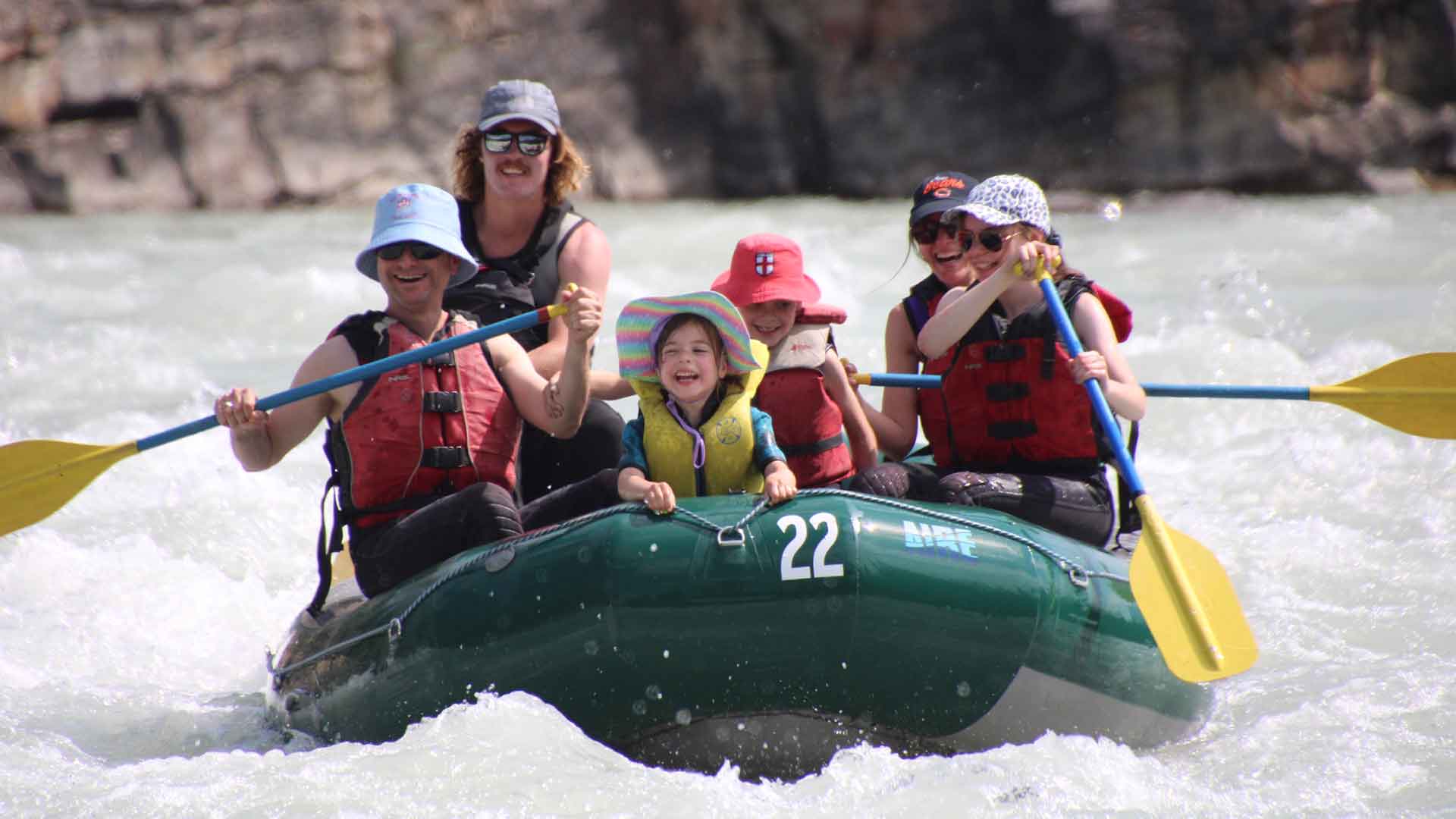
We run three trips on two rivers, and each has a minimum age based on the difficulty of the water, not an arbitrary rule. Here is exactly where each stands:
- Mile 5 Athabasca Trip — Minimum age 5. This is our most family-friendly trip and the one we recommend for anyone bringing young children. It is a Class II float along a stunning, wide stretch of the Athabasca River through Jasper National Park. The rapids are fun and splashy but not scary, and there is plenty of time to drift, spot wildlife, and take everything in.
- Athabasca Falls Trip — Minimum age 6. This trip covers Class II whitewater and runs thru the Athabasca Falls canyon. The water moves faster and the rapids are more significant of the start. Kids aged 6 and up who have some confidence around water generally love it.
- Sunwapta River Trip — Minimum age 12. The Sunwapta is our most technically demanding trip, featuring sustained Class III whitewater in a dramatic forested setting. This is a serious rafting experience that requires participants to hold paddle commands under pressure. We do not bend the age minimum on this one.
A question we get often is whether a tall, confident 10-year-old can come on the Sunwapta trip. The honest answer is no, and here is why: the minimums are based on the physical ability to self-rescue in moving water and weight, not on height or maturity. A child needs a certain level of shoulder and core strength to hold onto a moving raft and respond to guide commands in a rapid. We set the age lines after decades of observing exactly where that threshold sits in practice.
What the Mile 5 Trip Is Actually Like for Kids
The Mile 5 trip runs approximately one hour from put-in to takeout. Here is what a typical family trip looks like from start to finish.
We start with a gear-up on shore. Kids get fitted into a wetsuit, PFD, and booties before anyone gets near the water. Our guides take their time with the little ones here. We check every buckle, adjust every strap, and make sure everyone is comfortable before we move on.
The pre-trip safety talk happens next. We have given this talk to thousands of children over the years, and we have learned to keep it simple, clear, and fun. We teach three paddle commands: forward, back, and stop. We demonstrate what to do if someone goes in the water (which almost never happens on this trip, but kids like knowing the plan). We answer every question, no matter how many times a version of “will we flip?” comes up.
On the water, the Athabasca River does a lot of the work for us. The scenery in Jasper National Park is extraordinary, and kids tend to light up when they spot an osprey, a deer on the bank, or the distant peaks of the Rocky Mountains framing the valley. The Class II rapids are just intense enough to get everyone excited and soaked, but there are long calm stretches in between where kids can drag their paddles, splash each other, and just take it all in.
By the time the raft reaches the takeout, most kids are somewhere on the spectrum between elated and exhausted. We have never had a child finish the trip wishing they had not come.
Safety Gear for Kids: How We Fit Children Properly

All safety gear is included in the price of your trip. You do not need to bring anything except your child. Here is what we provide and how the fitting process works:
- Wetsuit: We stock child-sized wetsuits starting from the smallest kids who qualify for the Mile 5 trip. Wetsuits are mandatory for all participants. The Athabasca River is glacier-fed, and even in July and August the water temperature sits around 4 degrees Celsius. Adults sometimes assume their kids will be fine without one because it is warm outside. They will not be. The wetsuit is not optional, and it is genuinely what keeps the cold-water shock from ruining an otherwise great trip.
- Personal Flotation Device (PFD): We carry child-sized PFDs that fit smaller torsos correctly. An adult PFD on a child is a safety hazard, not a safety measure. We fit every PFD with the buckle-and-tug test to confirm it cannot ride up over the child’s head in the water.
- Booties: Child booties are in stock and adjusted to fit snugly before anyone boards the raft.
What should kids wear under the wetsuit? A swimsuit or underwear works well. The one thing to avoid is cotton, including cotton T-shirts and cotton underwear. Cotton holds water and gets cold fast. Synthetic fabrics dry quickly and work with the wetsuit rather than against it.
How to Prepare a Nervous Child for Their First Rafting Trip
Nervous kids are something we know well. Over 50 years of guiding families, we have helped a lot of children get from reluctant to ready. Here is what actually works.
The most effective thing a parent can do before the trip is set the right expectations, not reassure away the nervousness. Telling a child “there is nothing to be afraid of” tends to backfire. Instead, tell them: “You are going to get wet. That is the whole point. You are going to feel the boat move fast in a few spots, and that is exciting. The guide will be with you the whole time and will tell you exactly what to do.” That framing helps kids arrive knowing what to expect rather than bracing for an unknown.
On the day of the trip, we do our part. Our guides have a practiced way of getting nervous kids comfortable. We involve them in the gear-fitting process, ask them questions, let them hold the paddle before we get on the water. By the time we push off from shore, most nervous kids have shifted from anxious to curious, which is exactly where we want them.
A few practical tips from our experience:
- Do not let kids watch intense whitewater videos online before the trip. The Mile 5 trip is nothing like that footage, but it can prime a child to expect the worst.
- Arrive a few minutes early so there is no rush getting on the buses. Hurried transitions make nervous children more nervous.
- Let your child ask their questions directly to the guide. Kids often settle down faster when they get answers from the person who will actually be in the raft with them.
- When you book, note your children’s ages and any concerns in the booking notes. It takes thirty seconds and means your guide can come prepared to spend a little extra time with your child before the trip.
What Parents Need to Know About Water Temperature
This is the piece of information that surprises families most, and it is the one we most want parents to understand before they arrive: the Athabasca River is cold. Not refreshing-cool on a hot day cold. Genuinely cold. The river draws its water from glaciers and snowfields in the Rockies, and even at the height of summer in late July and early August, water temperatures typically range from 4 to 5 degrees Celsius.
For kids, this matters more than it does for adults. Children lose body heat faster than adults do, and a child who is cold and wet will have a much harder time enjoying the trip. The wetsuits we provide are a genuine safety measure, not an upsell. They trap a thin layer of water against the skin that the body quickly warms, and that insulation makes an enormous difference over the course of a two-hour trip.
Even with a wetsuit, we recommend that parents bring a full change of dry, warm clothes for every child and a towel. The moment the wetsuit comes off at the takeout, kids cool down fast. Having dry clothes ready makes the transition comfortable and keeps everyone in a good mood for the rest of the day.
When to Book: Summer Timing Tips for Families
Our season runs May through September, and the best family months are July and August when school is out and the summer weather is most reliable. One note the Athabasca Mile 5 is particularly good in lower water May, June and September. A few booking tips that will make your trip go more smoothly:
- Book summer weekends well in advance. July and August weekends fill up weeks ahead of time. If your family is visiting Jasper during a summer long weekend or school holiday, book as early as you can.
- Morning trips are ideal for young children. As noted earlier, morning departures kids tend to have more energy and patience earlier in the day. Late-afternoon trips can work fine, but morning is our recommendation for families with children under 8.
- May, June, and September are quieter. If your schedule is flexible, shoulder-season dates offer shorter lineups and a more relaxed experience. Water levels are typically higher in June due to spring runoff, which can make the river faster and more dynamic. September is calm and beautiful, with fall colours beginning in the valley.
- Note ages when booking. We cannot stress this enough. When you complete your booking, take a moment to add your children’s ages in the notes field. This lets us assign you to the right trip if you are uncertain, pull the correct gear sizes before you arrive, and brief your guide on your group makeup so they can plan accordingly.
What to Pack for Kids on a Rafting Day
We provide the wetsuits, PFDs, and booties. Here is what parents should bring:
- Swimsuit. No cotton.
- Full change of dry clothes for every child, including socks and a light jacket.
- Towel. One per person is ideal.
- Sunscreen applied before arrival. The river reflects sunlight and kids burn faster than expected on the water. Apply at your accommodation before you come, since sunscreen cannot go on over a wetsuit.
- Water bottle. Kids get thirsty on the water even when surrounded by water. Bring a refillable bottle.
- Snacks for after. Post-trip hunger is real. A granola bar, fruit, or trail mix in the car is a good call.
- A small dry bag or waterproof pouch if you want to bring a phone or camera on the raft. Our guides can advise on what to bring on the water and what to leave at the vehicle.
Three Generations on One River
We have been guiding families on the Athabasca River since the 1970s, and over those decades we have watched something remarkable happen again and again. Parents who rafted with us as kids in the 1980s and 1990s now show up with their own children. In a few cases, we have had grandparents in the same raft as their adult children and their grandchildren, three generations paddling together through the same stretch of river in Jasper National Park.
That kind of continuity is not something you can manufacture. It comes from consistently delivering a trip that people remember. The Athabasca River does not change much from year to year. The mountains are still there. The wildlife is still there. The cold, clear water is still there. What we add to that is 50 years of guiding knowledge, a genuine investment in safety, and a love for this place that shows up in how we do our jobs.
When a family finishes a trip and the kid who was nervous at the put-in spends the whole drive back to the hotel retelling every rapid, that is the part of this work we would not trade for anything.
After the Trip: Making a Full Day of It

A morning rafting trip finishes early enough to leave the rest of the day wide open. Here are the after-trip activities families combine most often with a rafting trip in Jasper:
- Athabasca Falls. If you take the Athabasca Falls rafting trip, you pass the canyon during the trip itself. But even after the Mile 5 trip, a stop at Athabasca Falls is a ten-minute drive south of town and a short walk to one of the most dramatic waterfalls in Canada. Kids who have just been on the river find the falls context especially impressive.
- Lake Annette swimming. Lake Annette is the warmest swimming lake in Jasper National Park and has a sandy beach, a picnic area, and lifeguards in summer. It is the perfect place to warm up after the cold river water. Kids who spent the morning being brave on the raft tend to have unlimited energy at the beach.
- Wildlife watching in the valley. Late afternoon along the Athabasca River valley and around the edges of town is prime time for elk, deer, and if you are lucky, black bear sightings from the road. A slow drive along Maligne Lake Road or toward Pyramid Lake is often productive. Keep windows up and distance from any animals you spot.
- Pyramid Lake. A short drive from the Jasper townsite, Pyramid Lake offers paddleboarding, canoe rentals, and views of Pyramid Mountain. It is a calm, beautiful way to wind down after an active morning.
Jasper is one of the few places where you can legitimately do whitewater rafting, swim in a mountain lake, walk to a world-class waterfall, and spot elk in the wild all before dinner. Families who plan their day around a morning rafting trip consistently tell us it was the best day of their trip to the Rockies.
We are located at 618C Connaught Dr in Jasper, and our office is open from 8 AM to 6 PM, May through September. You can reach us at +1-780-852-4292 to talk through trip options for your family before you book. We are happy to answer questions and help you choose the right trip for the ages and experience levels in your group.
Frequently Asked Questions: Rafting in Jasper with Kids
What is the minimum age for rafting in Jasper?
The minimum age depends on the trip. Our Mile 5 Athabasca trip welcomes children aged 5 and up, making it Jasper’s most family-friendly rafting option. The Athabasca Falls trip requires a minimum age of 6, and our Sunwapta River trip is open to participants aged 12 and older due to its Class III whitewater.
Is the Athabasca River safe for young children?
Yes, the Mile 5 section of the Athabasca River is a Class II float that is well-suited for young children when proper safety gear is used. We equip every child with a fitted personal flotation device and booties, and our guides have been leading family trips on this stretch of river since the 1970s. The water is cold and glacier-fed, so wetsuits are provided and required for all participants.
What do kids wear on a rafting trip in Jasper?
We provide a full wetsuit, personal flotation device, and booties in child sizes at no extra charge. Kids should wear a swimsuit or underwear underneath the wetsuit. Avoid cotton. Bring a full change of dry clothes and a towel for after the trip.
How do I prepare my child for their first rafting trip?
Tell your child they will get splashed and that getting wet is part of the fun. Let them know a guide will be in the raft the whole time and will give clear instructions before the trip starts. At the put-in, our guides take extra time with first-timers, especially young ones, to explain paddle commands and what rapids look and feel like so there are no surprises on the water.
Which Jasper rafting trip is best for families with young children?
Our Mile 5 Athabasca trip is the best choice for families with young children. It is a one-hour Class II float that accepts children from age 5, features gentle rapids, wildlife sightings, and plenty of splashing without the intensity of higher-grade whitewater. Families with older kids aged 6 and up can also consider the Athabasca Falls trip for a step up in excitement.


