


Jasper in July: What to Do, What to Book, and What to Expect
We have been running whitewater rafting trips out of Jasper every July since the 1970s. We have watched the park change through decades of seasons, and if there is one thing we can say with certainty, it is this: July in Jasper is something special, and it rewards the guests who come prepared for it.
The days are long, the rivers are running strong, the trails are clear, and the park is alive in a way that no other month quite matches. It is also the busiest month of the year by a significant margin, which means some things require planning that would be optional in May or September.
This guide covers what we know from five-plus decades of working every summer in Jasper National Park. We will tell you what to expect on the river, which spots get crowded and when, what to book before you arrive, and what to pack.
TL;DR: July is Jasper’s best and busiest month. Book rafting at least a week ahead (two to three weeks for Canada Day weekend). Arrive at popular sites before 9am or after 5pm to beat crowds. River conditions are excellent all month. Pack layers and sunscreen. Buy your Parks Canada pass online before you arrive.
July in Jasper at a Glance

July is Jasper’s warmest and busiest month. Valley temperatures typically sit between 18 and 25 degrees Celsius during the day, though mornings can start cool and afternoon thunderstorms are not unusual, especially at higher elevations. The mountain weather changes quickly, so layers are always worth carrying even in the height of summer.
One thing that surprises many first-time July visitors is the daylight. Sunset comes past 10pm in early July, dropping only slightly toward the end of the month. This gives you an extraordinary amount of usable time each day, and it completely changes the feel of a summer evening in the park. We have watched more than a few guests look up in shock at 9:30pm, convinced it was maybe seven o’clock.
The town of Jasper itself buzzes in July. Restaurants fill up, the main street is active all day, and the parking lots at major trailheads and viewpoints can be at capacity by 9 or 10 in the morning on busy days. This is not a deterrent; it is simply a reason to plan your timing thoughtfully.
July 1 is Canada Day, and it marks the single busiest weekend of the year in the park. We will cover that in its own section below.
River Conditions in July
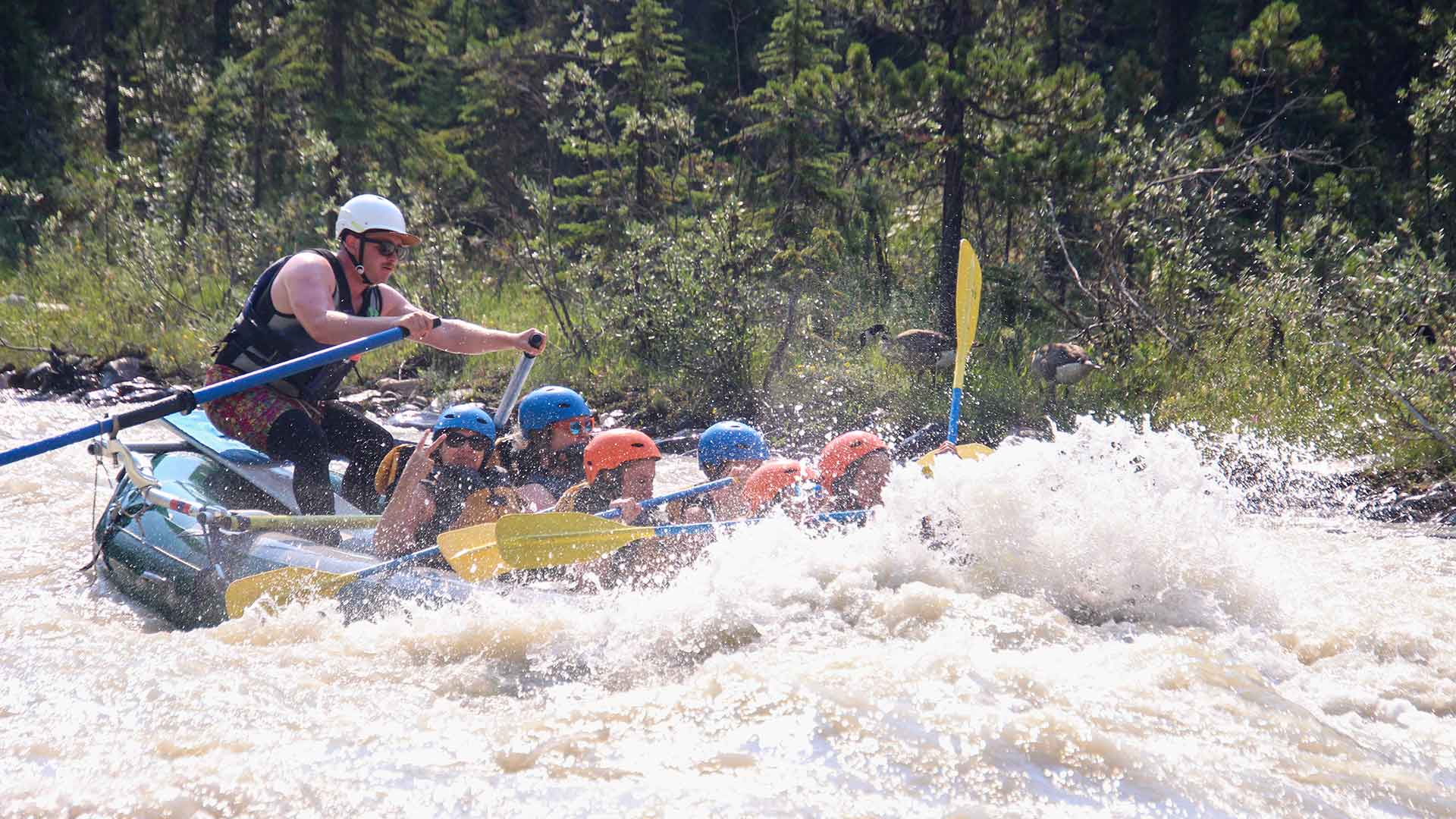
This is the part we know best. The Athabasca River’s peak runoff typically comes in June, driven by snowmelt across the surrounding watershed. By the time July arrives, water levels are still strong but have often settled into a more consistent range. What this means in practical terms is that July often gives us the best combination of the season: the river is full and energetic, but without the occasional unpredictability of a high-runoff June day.
By mid-July, levels begin a gradual taper as the snowpack source diminishes. This is a very slow process, and the river remains excellent for rafting through all of July without exception. In nearly every year we have operated, late July on the Athabasca has been some of the most enjoyable water of the season.
Water temperature in July runs cold. Glacier melt feeds continuously into the system, keeping river temperatures between approximately 7 and 12 degrees Celsius. We tell guests every trip: the water feels cold the moment you splash in, and that is completely normal. Our guides are trained in cold water safety and all guests wear wetsuits, drysuits, or splash gear appropriate to the conditions. The cold water is also part of what makes a hot July day on the river feel so refreshing.
We offer three trips that run through July:
- Mile Five (Class II) — great for families and first-timers, calm and scenic
- Athabasca Falls (Class II-III) — our most popular trip, launching just below the falls
- Sunwapta River (Class III) — our most exciting trip, for guests looking for more technical whitewater
Rafting in July: Why It Is One of Our Favourite Months
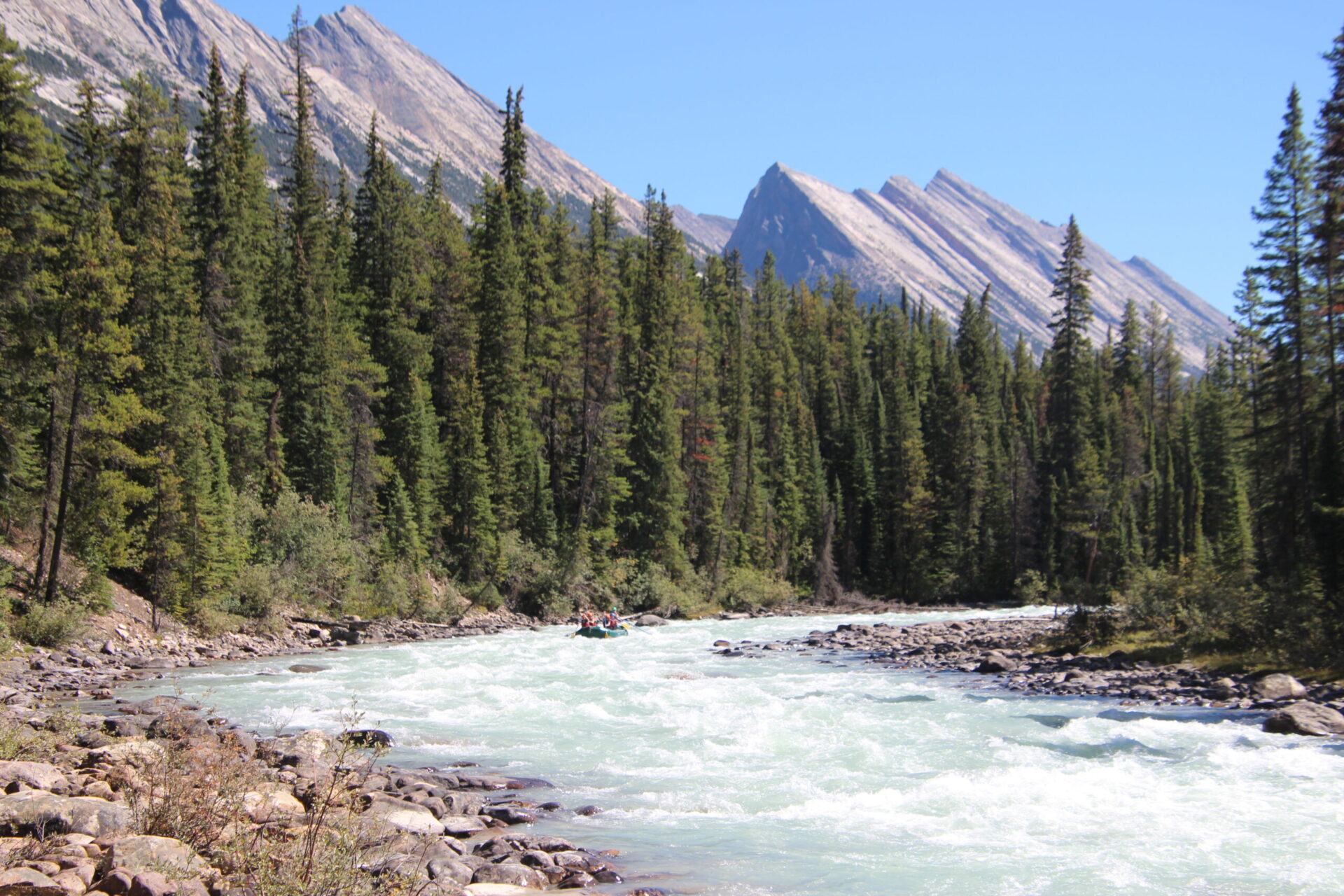
Ask any of our guides what their favourite month to be on the water is, and a good number will say July. The combination of reliable conditions, warm air, long days, and the wildlife that frequents the riverbanks in summer makes for an experience that is hard to match anywhere in the Canadian Rockies.
Elk are frequently spotted along the banks of the Athabasca in July, particularly in the mornings. We have floated past osprey nesting sites, watched bears moving along the hillsides above the river, and seen great blue herons standing still in the shallows while guests in the raft stared in disbelief. The river corridor is a wildlife corridor, and July is when it is most active.
The warm air temperatures also make the cold water splash-in a genuine pleasure rather than a shock to push through. On a 22-degree afternoon, getting a faceful of Athabasca glacier melt is exactly what you want. Our morning trips tend to have slightly cooler air but quieter water and better wildlife. Afternoon trips often feel celebratory, with the warmth of the day at its peak and the mountains glowing above the canyon walls.
One practical note: July weekends fill up. We have had guests arrive at our office on a Saturday morning in mid-July assuming they could book a same-day trip, only to find that our morning departures were already full. We do not say this to alarm anyone. We say it because we want you to have the trip you came for. Book at least a week in advance for July weekends, and book two to three weeks ahead for Canada Day weekend.
Canada Day Weekend and What to Expect
The Canada Day long weekend (centred on July 1) is the biggest single weekend Jasper sees all year. We have operated through this weekend for decades and the pattern is consistent: accommodation books out months ahead, campsite reservations are snapped up the morning they open, and the park gates on Highway 16 can see queues well into the morning on July 1 itself.
Here is what we recommend if you are planning to visit for Canada Day weekend:
- Book your rafting trip at least three weeks in advance, ideally more
- Reserve your campsite as soon as the reservation window opens on the Parks Canada reservation system
- Purchase your Parks Canada Discovery Pass online before you arrive to avoid the gate queue
- Plan to arrive at popular viewpoints very early (before 8:30am) or in the evening after 6pm
- Fill up with gas in Hinton before entering the park — station lines in Jasper can be long on peak weekends
The weekend itself, if you plan for it, is genuinely festive. The town of Jasper holds events, the park is buzzing with energy, and there is something memorable about watching fireworks from the valley with the silhouette of the Rockies surrounding you in every direction.
Wildlife in July
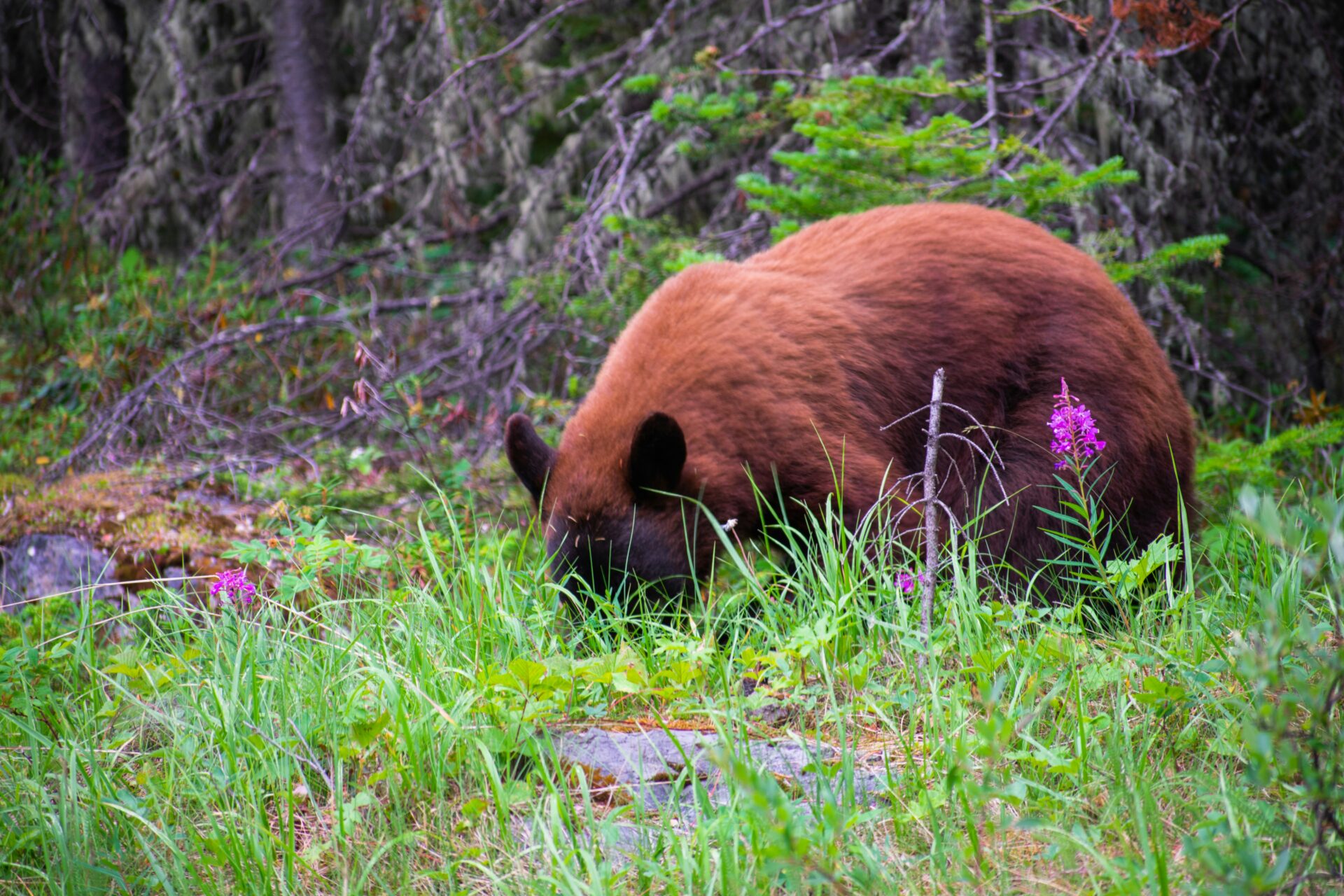
July is one of the better months for wildlife viewing in Jasper, and it spans a wide range of elevations and habitats.
In the valley bottom and around the townsite, elk are a near-daily sight. July is when elk calves are young but gaining confidence, often seen alongside their mothers in meadows and at the edges of the forest. The townsite itself sits within the park, and elk frequently move through it at dusk and dawn. Give them significant space — cow elk with calves are protective.
At higher elevations, black bears and grizzly bears are highly active throughout July. They move through subalpine terrain feeding on glacier lilies, berries beginning to ripen, and ground squirrels. The Icefields Parkway corridor is one of the best places in North America for roadside grizzly viewing, and July sightings are common. We have had guests come off our Sunwapta trip and pull over three times on the drive back to watch bears moving across the slopes above the highway. It is that kind of month.
Bighorn sheep are reliably spotted at Wilcox Pass and along the Icefields Parkway near the Columbia Icefield. Mountain goats are visible on cliffsides near Athabasca Falls and Cavell Road. Deer are common in the townsite throughout the summer.
A few wildlife viewing notes worth keeping in mind:
- Stay at least 30 metres from elk and deer, and at least 100 metres from bears
- Never feed wildlife — this is both illegal in a national park and genuinely harmful to the animals
- If you spot a bear from the road, pull fully off the road, stay in or near your vehicle, and keep traffic moving to reduce congestion
The Waterfalls: Athabasca Falls and Sunwapta Falls
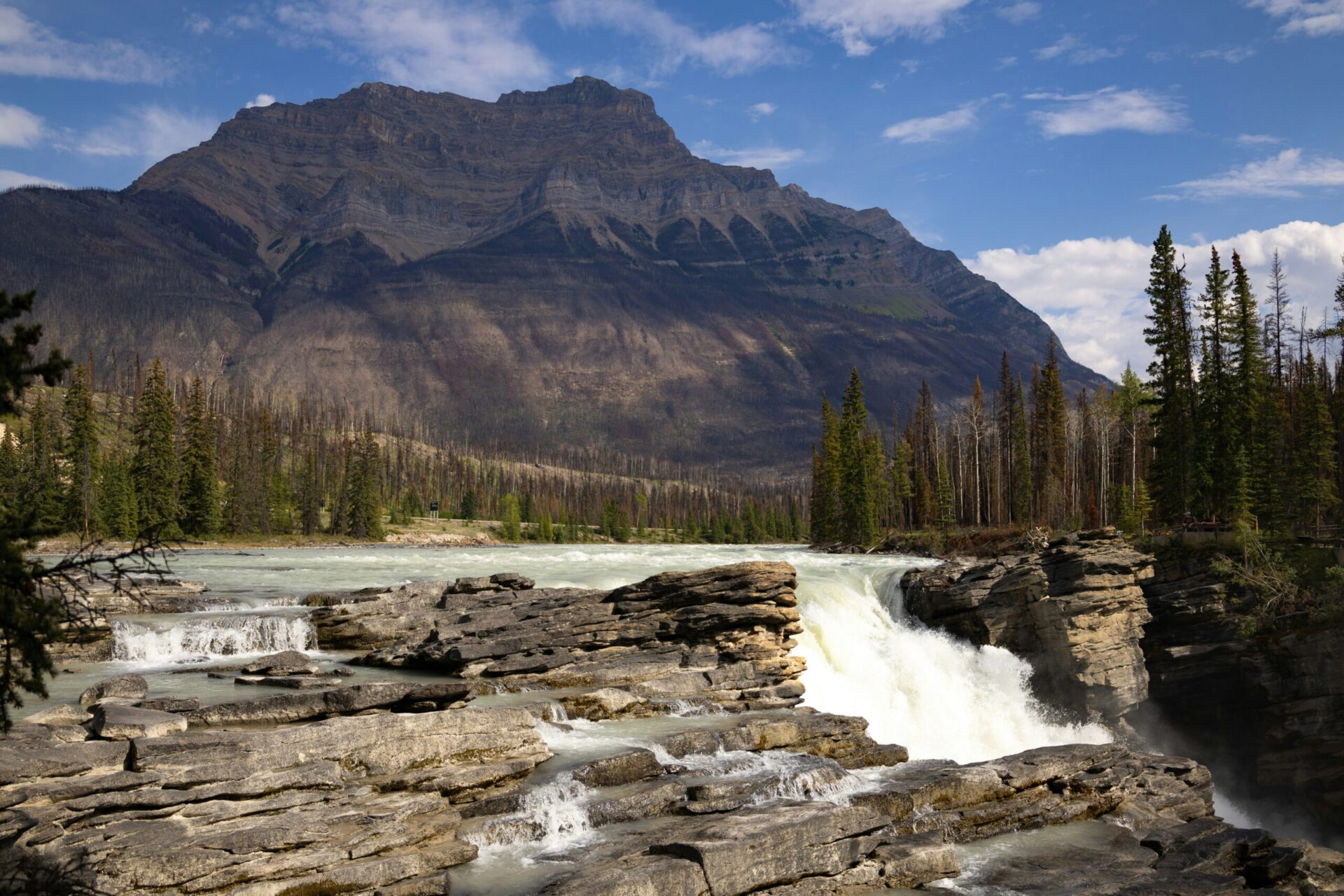
Both Athabasca Falls and Sunwapta Falls are must-see stops in Jasper, and July is when they run with tremendous force. The volume of water moving through both gorges in July is significantly higher than what you would see in August or September, and the visual impact is dramatic.
Athabasca Falls is approximately 30 kilometres south of the Jasper townsite on the Icefields Parkway. The falls themselves are not exceptionally tall, but the narrow quartzite gorge they cut through channels an enormous volume of water into a tight space. In July, the roar is audible from the parking area. Our rafting trips that launch from the Athabasca Falls put-in allow guests to look up at the gorge from water level on the way downstream — a perspective very few visitors get.
Sunwapta Falls is another 48 kilometres south, and it offers two tiers viewable from the roadside. Both are worth the short walk from the parking area.
Timing matters at both sites. Arriving before 9am or after 5pm will give you a dramatically different experience than arriving at noon on a July Saturday. The parking lots are small relative to demand, and the viewpoints can be shoulder-to-shoulder by mid-morning on peak days. Early arrivals are rewarded with soft morning light, quiet trails, and often significantly better wildlife sightings on the drive.
Hiking in July: Trails, Snow, and Wildflowers
By early July, virtually every trail in Jasper is clear of snow at valley and mid-elevation. The high alpine routes — Wilcox Pass, Skyline Trail, the Tonquin Valley — are typically clear or nearly clear by the second week of July depending on the specific year’s snowpack.
The wildflower window at elevation is one of the quieter pleasures of a July visit that many guests overlook because they are focused on the more famous landmarks. Mid-July at subalpine elevation brings glacier lilies, Indian paintbrush, fleabane, and mountain arnica in bloom across the open meadows. Wilcox Pass and the Cavell Meadows trail are both outstanding for this.
Some consistently strong July hikes in the Jasper area:
- Valley of the Five Lakes — Easy, scenic, accessible, excellent for families. Minimal elevation gain. Turquoise lakes in a forested setting.
- Maligne Canyon — Best visited early morning before 8am in July when it is quiet. The lower canyon is accessible year-round; the upper section opens fully by early summer.
- Wilcox Pass — Moderate, opens to sweeping views of the Columbia Icefield and bighorn sheep habitat. Wildflowers peak mid-July.
- Cavell Meadows — Access road sometimes opens late June or early July. The combination of Angel Glacier and meadow wildflowers is stunning in mid to late July.
- Skyline Trail — A multi-day backcountry route with a permit system. One of the finest high-alpine backpacking trails in Canada. Reserve early.
What to Book in Advance for July
This is the section we most want first-time July visitors to read carefully. July operates differently than May, June (excluding the Jasper wildfire recovery year), or September. Demand significantly outpaces availability on weekends and around major holidays.
Here is a booking timeline based on what we have observed over decades of operating in July:
- Rafting trips (weekends): Book at least 7 to 10 days in advance. Book 3 or more weeks ahead for Canada Day weekend.
- Maligne Lake cruise: This is consistently one of the most popular booked activities in the park. It fills 2 to 3 weeks ahead on summer weekends. Book the moment your trip is confirmed.
- Campsites: Parks Canada reservations open months in advance and July sites at popular campgrounds (Whistlers, Wapiti, Wabasso) go within minutes of the reservation window opening. Set a reminder and be ready on launch day.
- Accommodation: Hotels and inns in the townsite are typically booked solid for July weekends by April or earlier. Check availability early.
- Parks Canada Discovery Pass: Not a booking, but purchase this online before you arrive to bypass the gate kiosk queues on busy mornings.
We have genuinely watched tears of frustration from guests who drove from Calgary or Edmonton expecting to drop in and do it all, only to find rafting, the Maligne Lake cruise, and their preferred campsite all unavailable. The park has finite capacity, and July tests that capacity fully. Planning ahead is the single biggest factor in whether a July visit goes smoothly.
What to Pack for Jasper in July
July feels like summer, and it is — but the mountain environment means conditions can shift in ways that catch visitors off guard. Here is what we recommend:
- Layers: A warm fleece or light down jacket is useful for mornings and evenings, and essential at elevation. Even in late July, nights in Jasper drop to single digits.
- Rain layer: Afternoon thunderstorms are possible throughout July. A light packable rain jacket weighs almost nothing and changes a miserable wet afternoon into a minor inconvenience.
- Sunscreen and sunglasses: UV exposure at altitude is significantly higher than at sea level. On the river, water reflection amplifies this further. SPF 30 or higher, applied before your trip and reapplied after splashes. This is more important than most guests anticipate.
- Footwear: Sturdy walking shoes or light hiking boots for trails. Sandals or water shoes for the river (we provide wetsuits and spray gear; bring footwear you are okay getting wet).
- Bear spray: Available for rent in the townsite. If you are hiking independently in bear country, carrying it and knowing how to use it is a responsible choice.
- Reusable water bottle: Jasper has excellent tap water, and single-use plastics are discouraged throughout the national park.
Practical Tips From Operators Who Have Been Here Since the 1970s
A few practical items that fall outside the standard tourist advice but consistently make a difference for guests:
Fill up with gas in Hinton. Hinton is the last major town before you enter the park on Highway 16 from the east. Gas in Jasper is available but expensive and lines at the pumps on busy weekends can be long. Filling up in Hinton is simply faster and cheaper.
Buy your Parks Canada pass online. The gate queues on Highway 16 and Highway 93 on peak summer mornings can back up significantly. Purchasing a Discovery Pass or a day pass online before your trip means you can proceed through designated lanes and skip the kiosk wait. Given that some of the best wildlife viewing and quietest trail time happens in the early morning, losing 20 to 40 minutes at the gate is a meaningful cost.
Use the park’s shuttle systems where available. Parks Canada operates seasonal shuttles to high-demand trailheads. These are not available for all routes, but where they run they solve the parking problem entirely and reduce your carbon footprint in the park.
Plan your days front-heavy. Start early, be at the falls or the canyon by 8 or 9am, do your most popular stops before noon, then use the afternoon for activities that are less crowded or more flexible (rafting on a guided trip, a quieter hike, a picnic, a drive on the Icefields Parkway where you can pull over whenever something catches your eye). Evenings in July — with sunset past 10pm — are a gift, and some of the most beautiful light in the Rockies falls on the valley in the hour before dusk.
One thing we tell guests who ask us how to get the most out of July: the crowds are at the signs, not on the trails. Walk five minutes past the viewpoint and you will often be nearly alone. The park is enormous. The parking lots are small. Most people do not walk far, and that is your advantage.
If you are ready to book a rafting trip for your July visit, you can find all three of our trips at jasperraftingadventures.com, or call us at +1-780-852-4292. Our office on Connaught Drive is open 8am to 6pm May through September. We have been here every summer since the 1970s, and we would be glad to be part of your July.
Frequently Asked Questions About Jasper in July
Is July a good time to visit Jasper National Park?
July is one of the best months to visit Jasper National Park. The weather is warm, averaging 18 to 25 degrees Celsius in the valley, virtually all hiking trails are clear of snow, wildflowers are peaking at elevation, and the days are extremely long with sunset past 10pm. Rivers are running well for rafting and wildlife viewing is excellent throughout the park.
How busy is Jasper in July?
July is Jasper’s busiest month of the year. Canada Day weekend (July 1) is the single busiest weekend, and weekends throughout the month see the park at or near capacity. Popular sites like Athabasca Falls and Maligne Canyon can be very crowded by mid-morning. Booking accommodations, tours, and campsite reservations well in advance is strongly recommended.
What is the weather like in Jasper in July?
July is Jasper’s warmest month. Valley temperatures typically reach 18 to 25 degrees Celsius during the day. Mornings can be cool and afternoon thunderstorms are possible, especially at higher elevations, so packing layers is still advisable. Sun exposure is intense at altitude, and UV protection is important, particularly on the river where reflection amplifies the effect.
Should I book rafting in Jasper in advance for July?
Yes, particularly for weekends. July is our busiest period and weekend trips regularly fill up a week or more in advance. Canada Day weekend often sells out three or more weeks ahead. We recommend booking as early as possible to secure your preferred trip and departure time. Weekday trips in July typically have more availability than weekends.
What wildlife can I see in Jasper in July?
July is an excellent month for wildlife in Jasper. Elk calves are visible in the valley, often alongside their mothers near the townsite. Black bears and grizzly bears are active at higher elevations, feeding on glacier lilies and other early-season vegetation. Bighorn sheep are frequently spotted along the Icefields Parkway and at Wilcox Pass. Mountain goats, deer, and a wide variety of birds round out the viewing.


