


Undeniably The Best White Water Rafting in Alberta
Alberta has no shortage of rivers worth running. The province’s glacially carved mountain valleys feed some of the fastest-moving, most scenic waterways in North America, and several operators across the province have built excellent reputations on the strength of them. But when you sit down and compare every white water rafting option in Alberta, the rivers, the scenery, the guides, the history, and the total experience from parking lot to takeout, the answer keeps pointing to the same place: Jasper National Park.
We’ve been running guided white water rafting trips on the Athabasca and Sunwapta Rivers since 1971. We didn’t set out to make a comparison argument. We set out to share what we know about these two rivers and why, after more than five decades, we still think no other rafting in Alberta quite matches what Jasper offers. This is that case, made honestly.
Summary: Alberta’s best white water rafting is in Jasper National Park, on two rivers that flow through a UNESCO World Heritage Site designated in 1984 (UNESCO). The Athabasca River, at 1,538 km the longest in Alberta (Parks Canada), offers Class II family-friendly rapids with spectacular canyon scenery. The Sunwapta delivers Class III thrills through one of the most remote corridors in the Rockies. No other rafting in the province combines this level of scenery, wildlife, river quality, and guiding experience in a single day.
What Makes Jasper’s Rivers Stand Apart
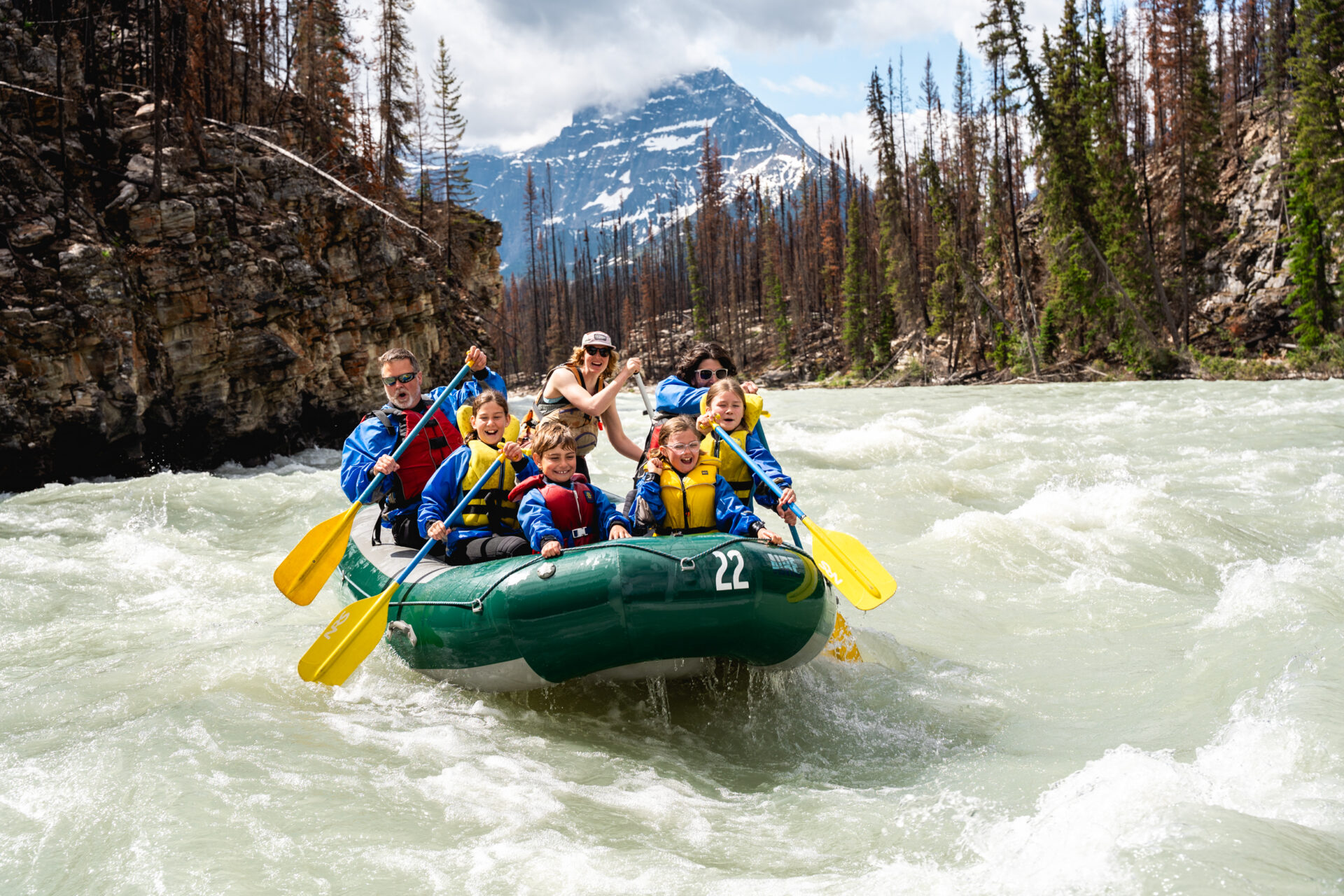
Jasper National Park covers 10,878 sq km and attracted approximately 2.48 million visitors in 2023 (Parks Canada). That scale of visitation in a protected wilderness corridor tells you something important: this is a place people come back to, not just a checkbox destination. The rivers that run through it carry that same quality into every trip.
Most Alberta rivers that offer commercial rafting share a characteristic. They run through agricultural land, developed corridors, or roadside access points that break the sense of wilderness. You raft for a stretch, see a highway bridge, continue, see a farmyard. The experience is good, but the context dilutes it.
Jasper is categorically different. The Athabasca River corridor runs through Jasper National Park, which is part of the Canadian Rocky Mountain Parks UNESCO World Heritage Site. The canyon walls on both sides are roadless. The only infrastructure visible from the water is the occasional footbridge. The wildlife present in that corridor, osprey hunting overhead, elk grazing the riverbank, black bears appearing in the willows, is there because it has been protected for over a century. You’re not rafting through a scenically enhanced experience. You’re rafting through genuine wilderness, and that difference is felt immediately on the water.
The Sunwapta River takes this further. Its Class III section flows through terrain so remote that the takeout point requires a shuttle vehicle. The walls of the canyon tighten around you as the river accelerates. For stretches of the trip you are the only human presence in a landscape that hasn’t meaningfully changed in thousands of years. That is what white water rafting in Alberta at its best looks and feels like.
Jasper National Park has been a UNESCO World Heritage Site since 1984, part of the Canadian Rocky Mountain Parks grouping (UNESCO). The park covers 10,878 sq km and supports over 69 mammal species (Parks Canada). That level of protected biodiversity is directly visible on the water: wildlife encounters on the Athabasca River canyon are routine, not exceptional.
The Athabasca River: Alberta’s Best Family Rafting
The Athabasca River is the longest river in Alberta, stretching 1,538 km from its headwaters at the Columbia Icefield to Lake Athabasca in the province’s northeast corner (Parks Canada). That length and glacial origin produce a current that stays consistently fast and cold through summer, giving the river its distinctive blue-green colour and making every trip feel like moving through something genuinely wild.
We offer two trips on the Athabasca:
- Mile Five (Class II), Our most accessible trip, accepting children from age 5. Mile Five covers 9 km of Class II rapids on the open Athabasca River with mountain scenery on every side. The water is exciting and splashy without being intimidating, and the views of the surrounding peaks are genuinely spectacular. This is the right choice for families with young children and first-time rafters, and anyone who wants the experience of fast mountain water in a safe, guided setting.
- Athabasca Falls (Class II), A 12 km trip that launches just below Athabasca Falls and runs through a limestone canyon to the Meeting of the Waters. Minimum age is 6. This is the most popular trip for guests who want more canyon scenery than Mile Five without committing to full Class III water.
After more than five decades on the Athabasca, what still strikes us is how consistently it surprises first-time guests. They arrive expecting a mild float trip. What they get is two hours of active paddling through a canyon that genuinely feels like the middle of nowhere, with the river moving faster than they expected and the views overhead better than any website prepares them for. That reaction hasn’t changed in fifty years.
So what is it about a glacial river canyon that stays with people so long after the trip ends? We think it’s the combination of real physical engagement and real wilderness, two things that are genuinely hard to find in the same place.
The Sunwapta River: Alberta’s Best Class III Rafting

The Columbia Icefield covers approximately 325 sq km, making it the largest icefield in the Rocky Mountains south of Alaska (Parks Canada). The Sunwapta River drains directly from it, and by the time it reaches the section we run, it has built real volume and speed. The Class III classification is earned. You will get wet. You will work hard. You’ll emerge at the takeout with the kind of shared accomplishment that only comes from taking on something real together.
The Sunwapta River is a different river and a different experience from the Athabasca. The rapids on this section are genuine Class III. The canyon tightens as the gradient increases, and for significant stretches of the route there is no road access on either side. That remoteness is part of what makes this trip the most talked-about one we run.
The Sunwapta trip is our recommendation for:
- Groups looking for genuine adventure rather than a scenic float
- Guests who have done Class II rafting before and want more challenge
- Bachelorette and bachelor groups, corporate outings, and friend groups where shared adrenaline is the goal
- Anyone who has been told the Kicking Horse or Nahatlatch are “the only real option” for Class III in the region. The Sunwapta is a legitimate Class III river and in many ways a more scenic one.
Minimum age for the Sunwapta is 12. Guests should be in good physical health and comfortable in moving water. Our guides have been running this river for decades and will brief every guest thoroughly before launch.
The Sunwapta River runs Class III rapids and drains the Columbia Icefield, which at approximately 325 sq km is the largest icefield in the Rocky Mountains south of Alaska (Parks Canada). The Kicking Horse runs Class IV; the Athabasca runs Class II (industry classification). For guests wanting genuine white water challenge within a national park setting, the Sunwapta sits in exactly the right position on that scale.
How Jasper Compares to Other Alberta Rafting Options
Jasper National Park drew approximately 2.48 million visitors in 2023 (Parks Canada), and a significant share of them came specifically for the rivers. That draw isn’t marketing. It’s the result of a setting that other Alberta rafting options simply can’t replicate. Here’s how the main alternatives stack up.
Kicking Horse River (Golden, BC)
The Kicking Horse is the standard reference point for Alberta-adjacent white water. It runs Class IV rapids on its main commercial section, making it the highest-difficulty commonly guided river in the region. If maximum technical difficulty is what you’re after and you’re comfortable with a Class IV experience, Kicking Horse is worth the drive to Golden. For families, beginners, or anyone who wants great white water without Class IV consequences, Jasper is the better choice, and significantly closer if you’re coming from Edmonton.
Red Deer River (Sundre area)
The Red Deer offers good Class II-III rafting in a prairie-foothills setting. Operators near Sundre and Clearwater run it well. It’s more accessible from Calgary than Jasper. It doesn’t offer the same canyon depth, glacial colour, or wildlife presence. For a day trip from Calgary with minimal driving, it’s a reasonable option. For anyone willing to make the drive to Jasper, the comparison is not close.
North Saskatchewan River
Several operators run the North Saskatchewan through the foothills near Rocky Mountain House. The river is wide and scenic, with Class II water appropriate for families. It lacks the canyon character and glacial intensity of the Athabasca. A solid option for casual paddling. Not in the same category for white water experiences.
What the comparison consistently comes back to is context. The rapids on the Athabasca are fun. The rapids on the Sunwapta are thrilling. But the reason guests call us years later to book again isn’t just the water. It’s the whole setting: the canyon walls, the glacial colour, the elk on the bank, the fact that Jasper itself is waiting for them at the end of the day. No other Alberta rafting experience is embedded in that kind of environment.
Gear, Safety, and What to Expect
We’ve been outfitting rafting guests since 1971, and every lesson we’ve learned about preparation is built into how we run our trips (Jasper Rafting Adventures). We provide all equipment for every trip: wetsuit, splash jacket, helmet, paddle, and personal flotation device. No experience or personal gear is required. Here’s what guests consistently wish they had known before arrival:
- Wear a swimsuit or quick-dry shorts underneath. You will get wet, especially on the Sunwapta. Arrive dressed for it.
- Close-toed shoes are required. Sandals with straps are acceptable. Flip-flops are not. Bring a dry pair of shoes to change into at the takeout.
- Leave your phone in the vehicle or bring a waterproof case. The rapids are real. Water gets into everything.
- Bring a dry bag for keys and anything you want to keep dry. We have dry storage at the base, but having your own bag for valuables simplifies the day.
- Book ahead in July and August. These months fill quickly and we can’t always accommodate walk-in bookings during peak season.
Every trip begins with a thorough safety briefing from your guide covering paddle commands, body position in the water, and what to do if you exit the raft. Our guides have decades of combined experience on these specific rivers. They know every rapid, every eddy, and every condition variation by season. You are in good hands.
The Jasper Advantage: World Heritage Scenery on the Water

Jasper National Park covers 10,878 sq km and has been designated a UNESCO World Heritage Site since 1984 as part of the Canadian Rocky Mountain Parks grouping (Parks Canada, UNESCO). The rivers running through it benefit from over a century of protection. That protection produces something real on the water: undisturbed old-growth forest reaching the water’s edge, canyon walls carved by millennia of glacial action, and wildlife that hasn’t been habituated to permanent human presence.
The park supports over 69 mammal species (Parks Canada). That density shows up on the river in ways that consistently catch guests off guard. Is there anywhere else in Alberta where you can paddle through a canyon, watch an osprey hunt overhead, and spot an elk on the bank within the same two hours? The Athabasca canyon is that place.
The osprey nesting above the Athabasca canyon have been there for generations. The elk on the riverbank are there because the valley is protected habitat. When a black bear appears in the willows on the far shore during a Mile Five trip, and it happens regularly, it’s a wild bear going about its morning. That is what a UNESCO World Heritage Site on the water looks and feels like.
Jasper National Park covers 10,878 sq km and supports over 69 mammal species, including black bears, grizzly bears, wolves, elk, moose, caribou, and bighorn sheep (Parks Canada). The park received approximately 2.48 million visitors in 2023 (Parks Canada). Wildlife encounters on the Athabasca River canyon are a routine part of a rafting trip, not a lucky exception, because over a century of protection has kept the corridor genuinely wild.
Booking Your Alberta Rafting Trip
We operate May 1 through September 30, 8 AM to 6 PM, from our base at 618C Connaught Drive in the Jasper townsite. All three trips depart from the same location. Shuttle transport to the Sunwapta put-in is included in the Sunwapta River trip cost.
To book or check availability, call us at +1-780-852-4292 or book online through our website. For groups requiring multiple rafts, corporate bookings, or bachelorette/bachelor parties, contact us directly so we can arrange the logistics to keep your group together on the water. Unsure if rafting suits everyone? Read our guide on whether you can raft if you cannot swim.
If you’re planning a Jasper trip and want to know which rafting experience fits your group, our team has answered that question thousands of times and can usually give you a clear recommendation in under two minutes. We know these rivers.
Frequently Asked Questions About White Water Rafting in Alberta
What is the best white water rafting in Alberta?
The best white water rafting in Alberta is on the Athabasca and Sunwapta Rivers in Jasper National Park. Both rivers flow through a UNESCO World Heritage Site, offer Class II and Class III rapids respectively, and are guided by operators with over five decades of experience on these specific rivers. The Sunwapta’s Class III section is the most thrilling commercially guided white water in Alberta.
How does Jasper rafting compare to Kicking Horse River rafting?
Both are excellent, but the experiences differ. Kicking Horse runs Class IV rapids and is the higher-difficulty option for experienced paddlers. Jasper’s Athabasca River is Class II, perfect for families, beginners, and guests who want fast mountain water without Class IV consequences. The Sunwapta sits in the middle at Class III. Jasper’s advantage is the setting: a national park UNESCO World Heritage Site with canyon scenery and wildlife that the Kicking Horse corridor doesn’t match.
What age is required for white water rafting in Alberta?
At Jasper Rafting Adventures, our Mile Five Athabasca trip accepts children from age 5. The Athabasca Falls trip requires a minimum age of 6. The Sunwapta River Class III trip requires a minimum age of 12. All trips require guests to be in good health and able to follow guide instructions. Contact us at +1-780-852-4292 to discuss age requirements for your specific group.
Do you need experience to go white water rafting in Alberta?
No prior experience is required for any of our trips. Full safety instruction is provided before every departure. All equipment is included. Our Athabasca River trips are designed from the ground up for first-time rafters and have been successfully run by guests of all experience levels since 1971.
When is the best time to go white water rafting in Alberta?
June through August is peak rafting season in Alberta. June and July have the highest water levels from glacial snowmelt, producing the fastest and most exciting conditions. July and August offer the warmest air temperatures. September is excellent for smaller crowds, comfortable temperatures, and the added backdrop of early fall colours along the canyon walls. We operate May 1 through September 30.


