Waterfalls in Jasper National Park You Need to See
Jasper National Park covers 11,000 square kilometres of the Canadian Rockies, and nearly every drainage in the park feeds a waterfall worth stopping for. We’ve run rafting trips on the Athabasca and Sunwapta rivers since the 1970s, which means we’ve seen these cascades in every condition: spring flood, late-summer trickle, and locked solid in January ice. This guide covers the seven waterfalls we’d recommend to anyone visiting Jasper, from the roadside stops you can see in five minutes to the remote backcountry falls that take two days to reach.
TL;DR: Jasper has 7 major waterfalls within 90 minutes of town. Athabasca Falls is the most powerful in the Canadian Rockies by volume. Sunwapta and Tangle Creek are easy Icefields Parkway stops. Geraldine Falls rewards a 5 km hike. Snake Indian Falls requires a 27 km backcountry approach. Peak flow runs late May through early July.
What Makes Jasper’s Waterfalls Worth the Stop?
Jasper sits at the convergence of several major river systems fed directly by the Columbia Icefield and surrounding glaciers. That glacial source means the water volume here is extraordinary compared to other mountain parks. Athabasca Falls alone processes more water per second than almost any other falls in the Rockies. That’s not marketing language. That’s what decades of watching this river tells you.
Jasper National Park holds UNESCO World Heritage Site status, and the waterfall network is part of why that designation exists. The park’s geology, glacial history, and river systems are all connected. When you’re standing at Athabasca Falls looking down into that quartzite canyon, you’re seeing millions of years of erosion compressed into one viewpoint.
We’d also say this: Jasper’s waterfalls are underrated compared to Banff. Fewer crowds, better light in the mornings, and more variety in terrain. If you’ve done the tourist loop through Banff and you’re looking for something with a bit more space, Jasper delivers every time.
Athabasca Falls: The Most Powerful Waterfall in Jasper
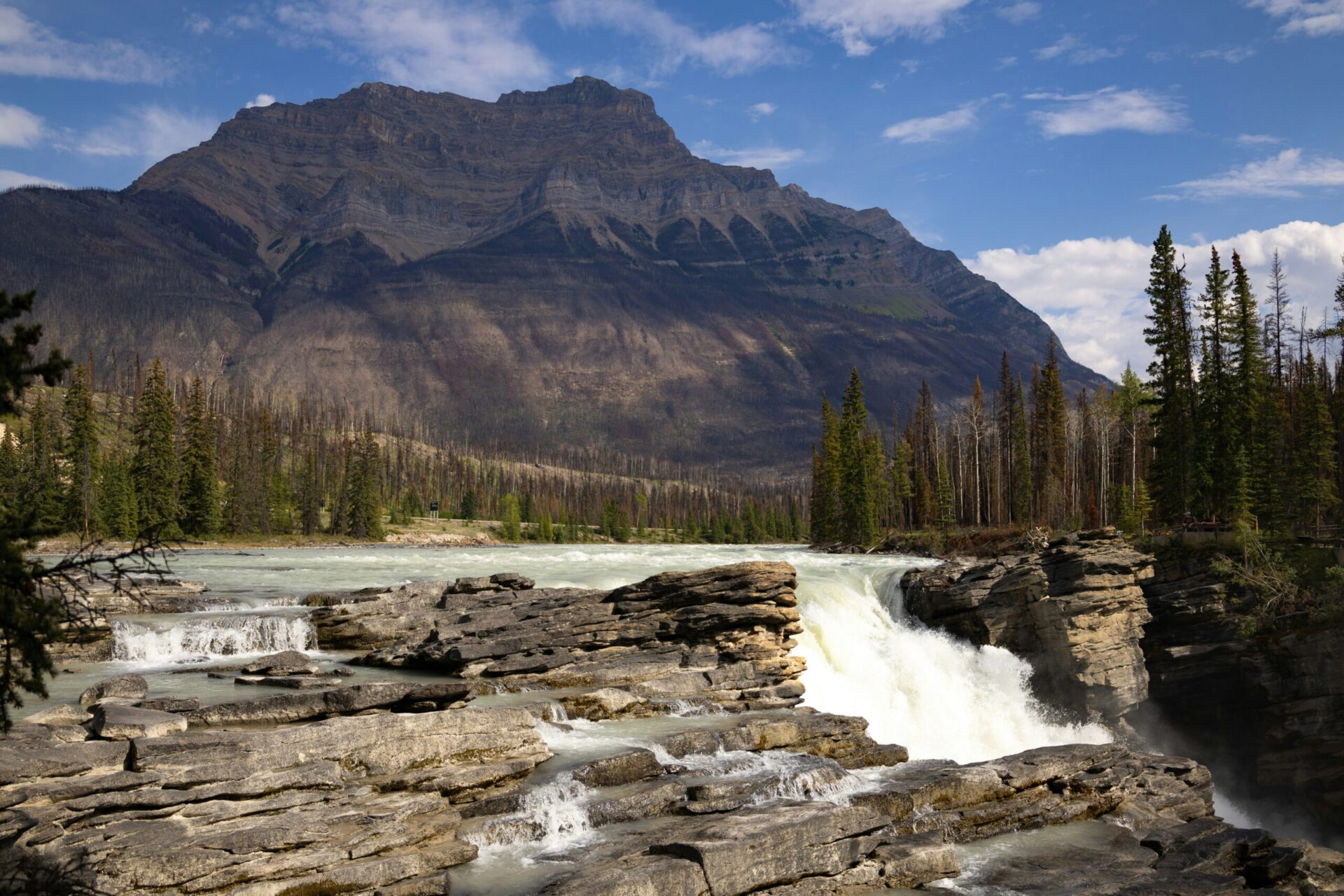
Athabasca Falls is recognized by Parks Canada as the most powerful waterfall in the Canadian Rockies by volume. It stands 23 metres high, and the entire Athabasca River forces itself through a narrow quartzite canyon to get there. The drop isn’t the tallest in the park, but the sheer volume of water makes it unlike anything else in the region. Most people are surprised by how loud it is before they even see it.
We run rafting trips through the Athabasca Falls section of the river, so we know this stretch of water from a different angle than most visitors get. From the raft, looking up at the canyon walls, you get a real sense of how much force this river carries. From the viewing platforms above, you get the drama of the drop. Both perspectives are worth having.
The access is straightforward: about 30 km south of Jasper on Highway 93A, well signed, with a large parking area. Arrive before 9 am in summer if you want the falls to yourself. The gorge downstream from the main falls is also worth the short walk. Most visitors stop at the primary viewpoint and leave. Don’t. The canyon walls show the active erosion process clearly, and there’s a pothole formation carved by the river that most people walk right past.
You’ll need a valid Parks Canada Discovery Pass for parking. Day passes are available at the park gate or online before you go.
Is Sunwapta Falls Worth the Drive South?
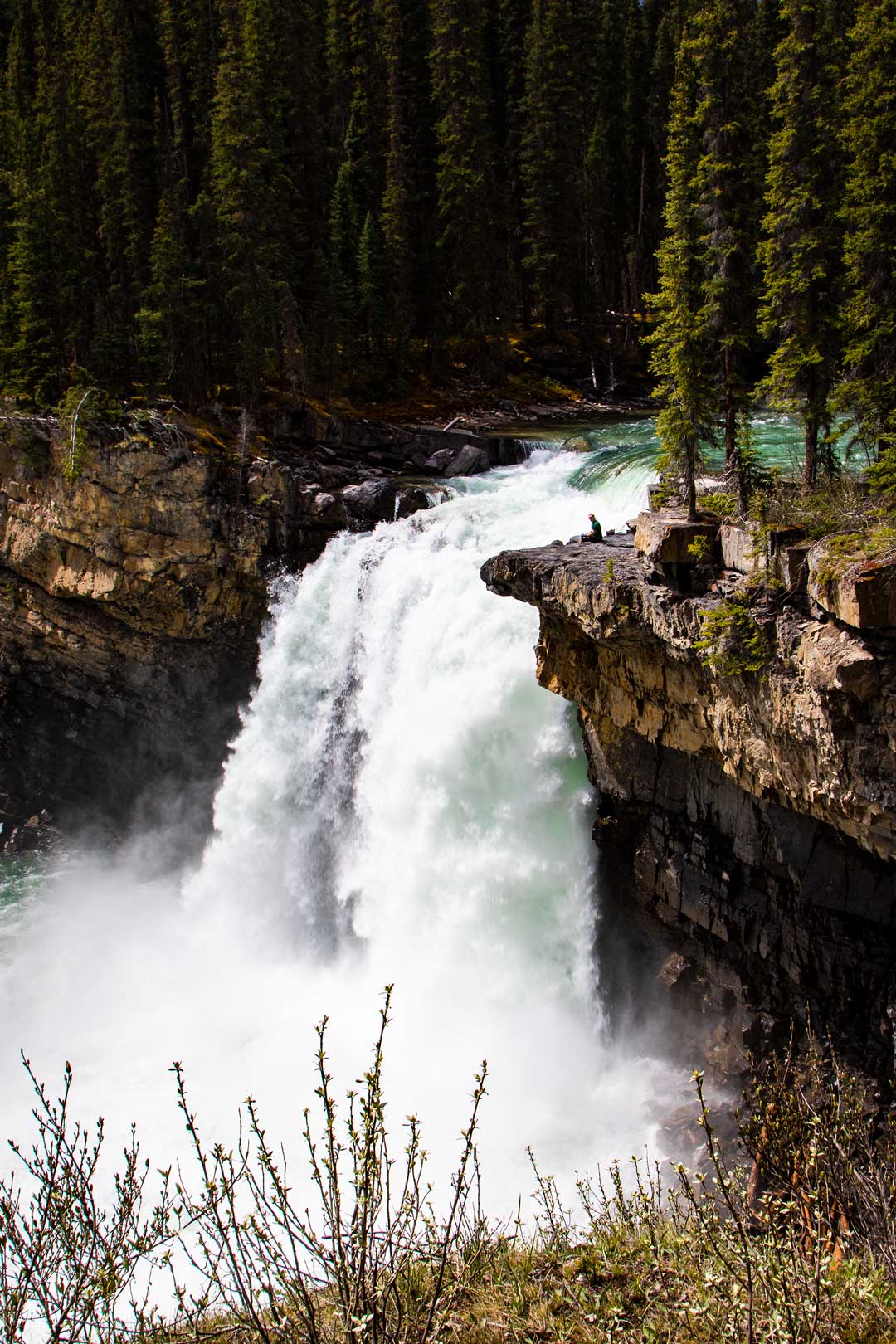
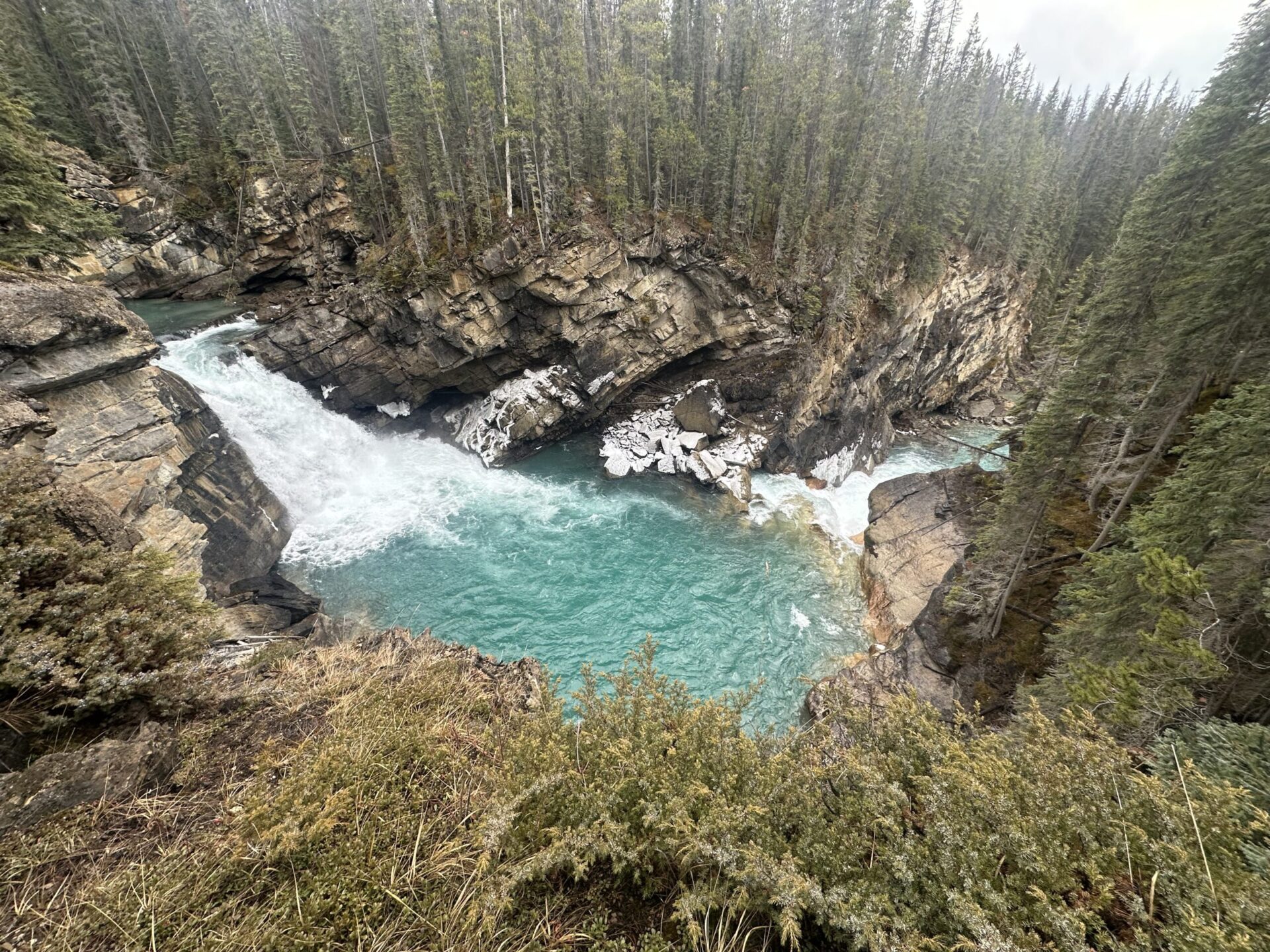
Yes, without question. Sunwapta Falls sits 55 km south of Jasper on the Icefields Parkway, and it runs as two separate drops: upper and lower. The upper falls are the dramatic one, a tight horseshoe canyon drop that most visitors reach easily from the parking area. The lower falls require a short walk downstream through forest and are, in our opinion, the better photograph.
The Sunwapta River is one we know well. Our Sunwapta River rafting trip runs through Class III whitewater not far from here, and the river’s character at the falls tells you exactly what to expect downstream: fast, cold, and constantly moving. Standing at the upper viewpoint, you can see why this river produces such good whitewater below.
The falls are at their best in June, when snowmelt from the Sunwapta Glacier is peaking. By August the volume drops noticeably, though the falls are still impressive. We’ve written a detailed guide to Sunwapta Falls separately if you want the full picture on parking, trail conditions, and what to bring. You can find it here: Sunwapta Falls: Complete Guide.
Tangle Creek Falls: The Easy Icefields Parkway Stop
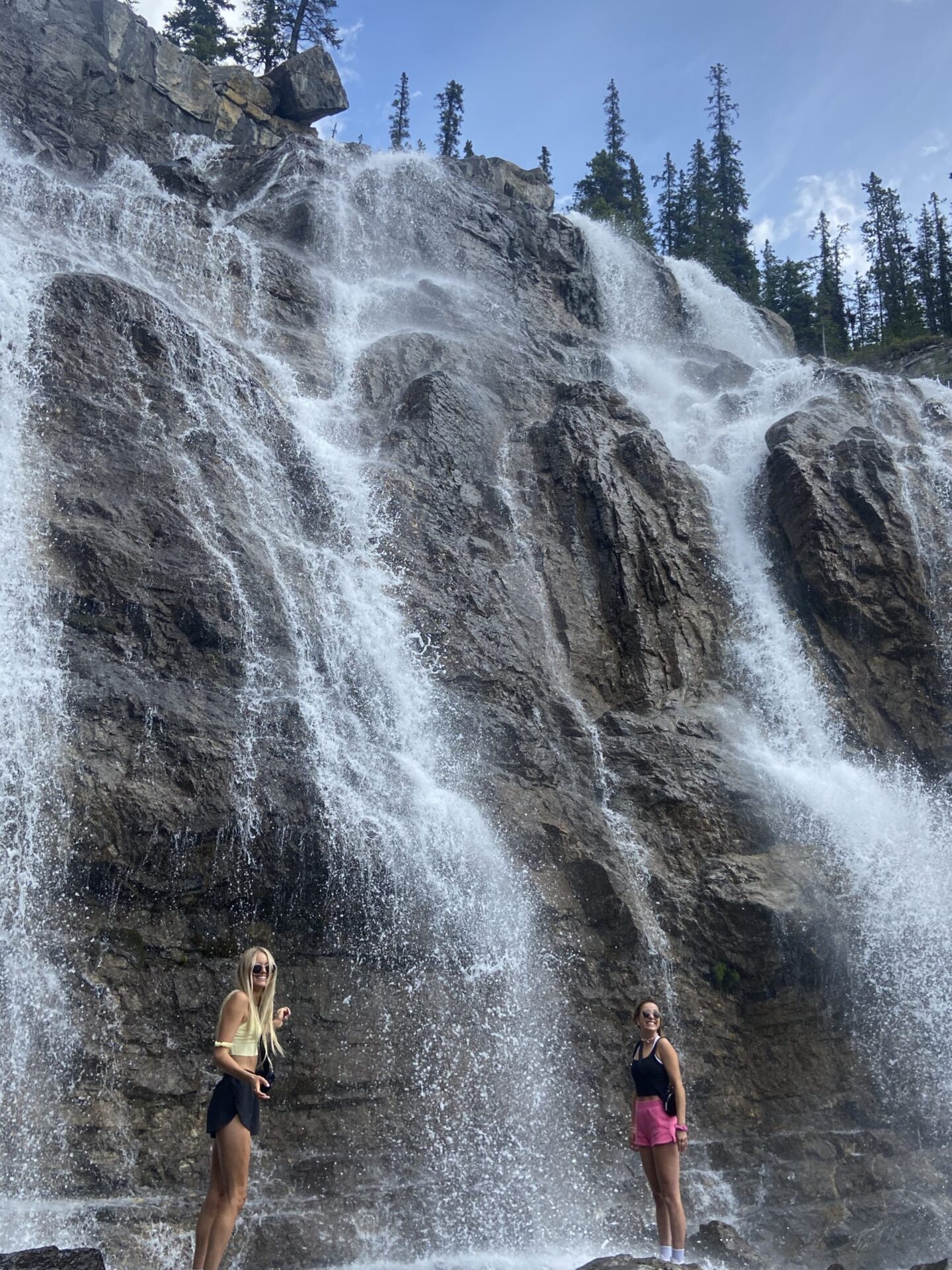
Tangle Creek Falls is one of the few major waterfalls in Jasper National Park that requires zero hiking. It cascades directly beside the Icefields Parkway, visible from your vehicle window, with a pullout right at the base. That accessibility makes it a reliable stop even on a rushed itinerary or with young children in the car. It’s a multi-tiered cascade, and the full face of the falls is visible from the road.
Most people see Tangle Creek as a quick photo stop, which it is. But it’s worth spending ten minutes here rather than thirty seconds. The falls are widest in morning light, and the rock face behind the cascade shows some of the most interesting geological layering on the whole Parkway. We’ve driven this road hundreds of times over the decades and we still pull over here.
Tangle Creek is located roughly 75 km south of Jasper, between the Sunwapta Falls turnoff and the Columbia Icefield Discovery Centre. If you’re doing a full Icefields Parkway day trip, it fits naturally between Sunwapta Falls and the glacier viewing area. No parking pass is required for the roadside pullout, though if you park at the nearby trailhead for the Wilcox Pass trail, a Discovery Pass applies.
Is Geraldine Falls the Best Hike-to Waterfall in Jasper?
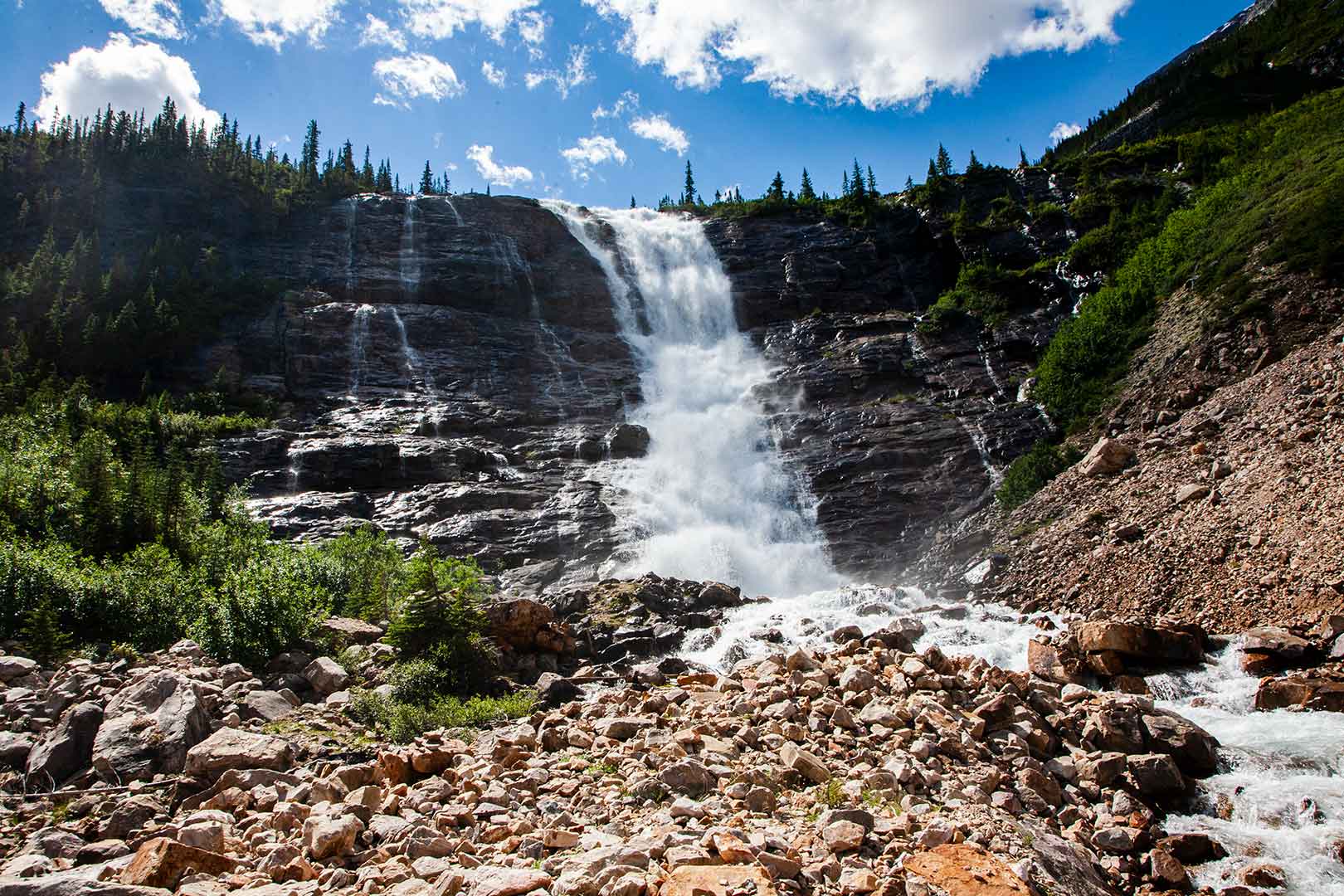
We’d say yes. Geraldine Falls is a 5 km hike from the trailhead near Athabasca Falls, and it delivers four tiers of cascades spread across a dramatic valley. The first tier is the most accessible, about 1 km from the trailhead, and it’s already impressive. The full trail to the upper tiers gains significant elevation and requires good footwear. Most visitors who go past the first tier have the upper falls almost entirely to themselves.
The trail starts at the Geraldine Lakes trailhead, accessed via a gravel road off Highway 93A. It’s a legitimate hiking trail, not a stroll, and the upper sections involve some scrambling near the waterfalls. We wouldn’t take young children past the first tier. But for fit hikers looking for something beyond the standard viewpoints, Geraldine is consistently one of the most rewarding half-days in the park.
Here’s what most people miss about Geraldine: the falls frame a series of lakes above them, and if you continue past the second tier, you reach Geraldine Lake itself with a view back down the cascade that doesn’t exist anywhere else in the park. It takes effort to get there. That effort is exactly what keeps the crowds away.
Check Parks Canada’s trail conditions page before heading out. The upper trail can be slick in early season or after rain, and some years snow lingers on the upper sections into late June.
Stanley Falls and Beauty Creek: The Hidden Icefields Stop
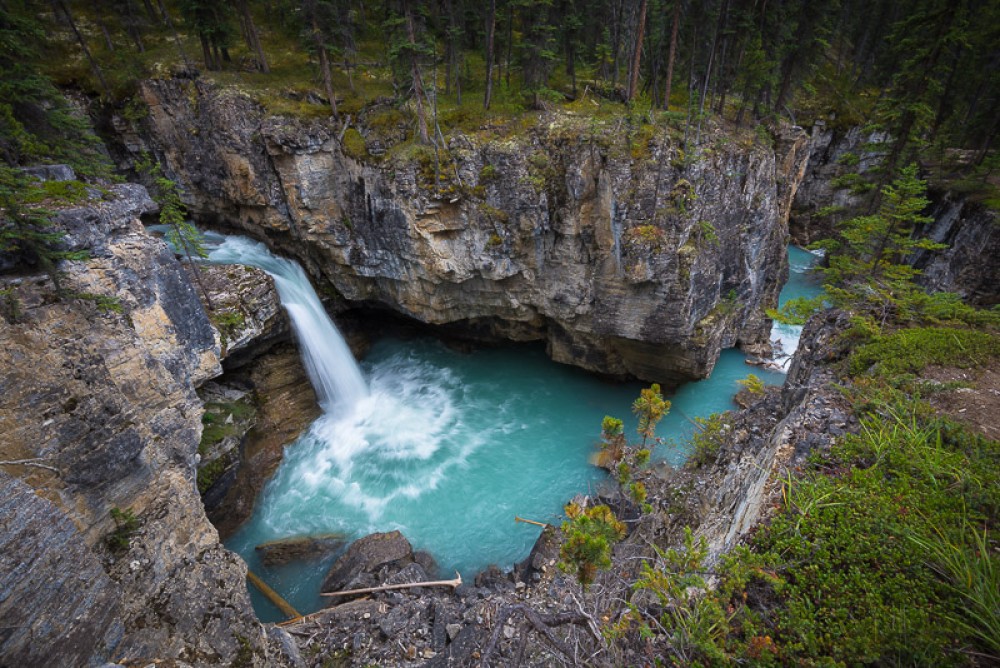
Stanley Falls, accessed via the Beauty Creek trailhead on the Icefields Parkway, is one of the most consistently overlooked stops on the whole drive. It sits roughly 87 km south of Jasper, in a section of the Parkway where most visitors are already focused on getting to the Columbia Icefield. The short trail (about 3 km return) follows Beauty Creek through a series of canyon pools and cascades, with Stanley Falls as the turnaround point.
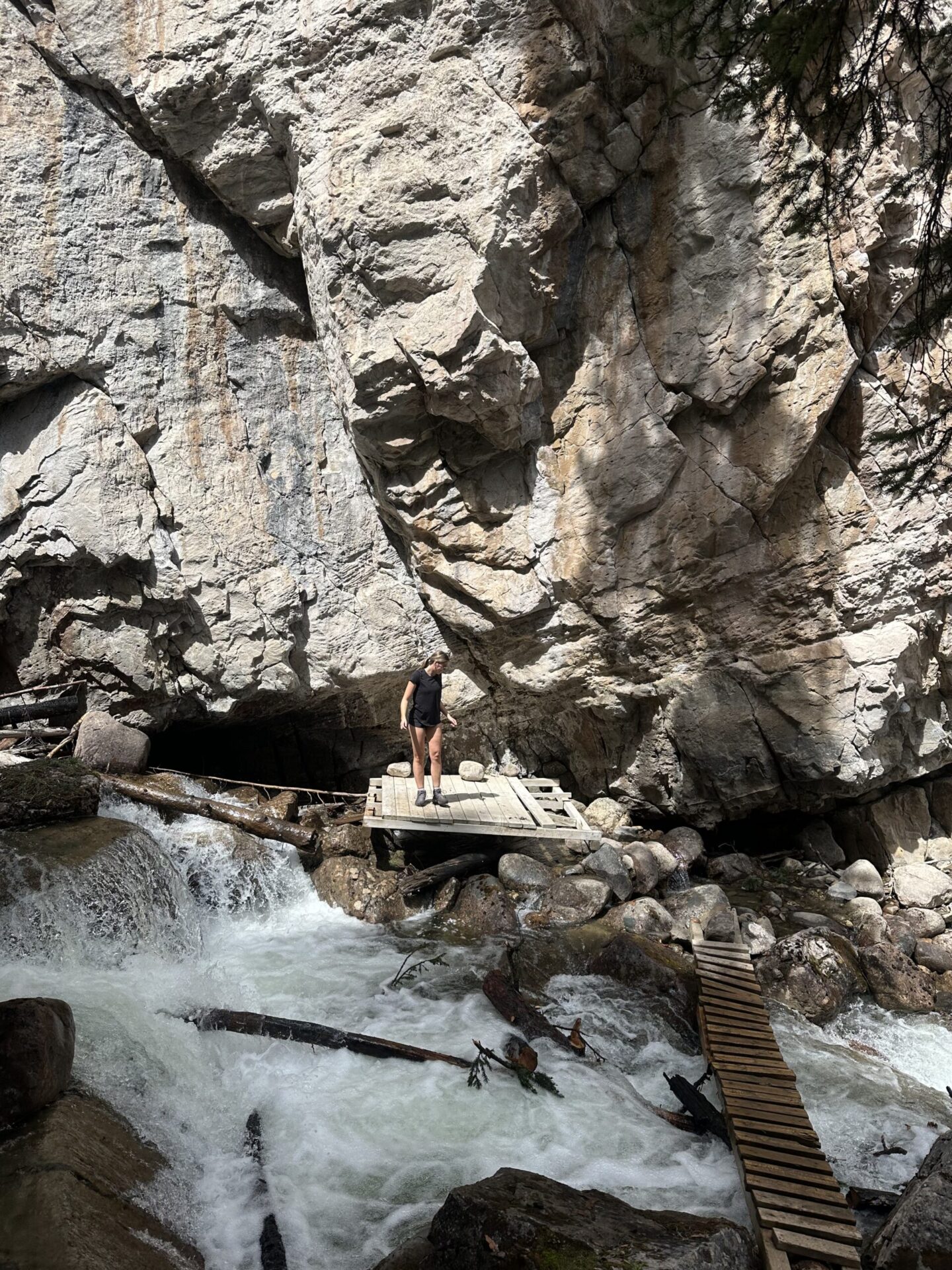
We’ve been recommending this stop to guests for years. It’s almost always quiet. The canyon along Beauty Creek is narrow and shaded, which means the light is interesting even midday when other waterfall spots are blown out by direct sun. The creek flows through a series of linked potholes before dropping into the main falls, and the canyon walls are close enough to touch in places.
It’s a legitimate hiking trail, not a paved interpretive loop, but it’s not technically demanding. Regular trail runners will handle it easily. The payoff is a falls that fewer than 5% of Icefields Parkway visitors ever see, despite being right beside the road. If you’re building an Icefields Parkway itinerary and you’ve already done the main stops, Beauty Creek is the addition that will make your day feel different from everyone else’s.
Snake Indian Falls and Watchtower Falls: Worth It for Backcountry Hikers
Snake Indian Falls is the most remote major waterfall in Jasper National Park, requiring a roughly 27 km one-way backcountry hike into the Willow Creek and Snake Indian River corridor in the park’s north end. It’s not a day trip. It’s a multi-day commitment, typically done as part of a longer backcountry loop. The falls themselves are massive, dropping through a wide, open canyon that you won’t find represented on most Jasper travel guides. They’re genuinely spectacular, and almost no one goes there.
Watchtower Falls is a similar story. It’s set in the backcountry southwest of Jasper, requiring a multi-day approach through serious wilderness terrain. If you’re an experienced backcountry hiker with overnight gear, bear canisters, and a backcountry permit (required through Parks Canada), both of these falls are genuine bucket-list objectives. If you’re visiting Jasper for a long weekend, they’re worth knowing exist so you have a reason to come back.
Backcountry permits for Jasper are available through Parks Canada’s reservation system. Book well in advance for summer dates, especially the popular northern corridor routes.
When Is the Best Time to See Jasper Waterfalls?
Peak flow at nearly every waterfall in Jasper runs from late May through early July. That’s when snowmelt and glacial melt combine to push maximum water volume through the river systems. Athabasca Falls in mid-June is significantly more dramatic than Athabasca Falls in late August. If you want the full force of these cascades, plan your visit for spring or early summer.
That said, each season has something to offer. Summer (July to August) brings the most reliable weather and the longest daylight hours, with evenings that stay bright past 9 pm. Fall brings colour in the surrounding forest, lower crowds, and a particular quality of light in the mornings. Winter closes most trailheads but leaves the roadside falls (Tangle Creek in particular) in spectacular ice formations that are genuinely worth seeing.
For crowds specifically: arrive at Athabasca Falls and Sunwapta Falls before 9 am or after 5 pm. Those two-hour windows on either side of the midday rush make a significant difference. We’ve watched the Athabasca Falls parking lot fill to capacity by 10:30 am on a July Saturday. Arriving early isn’t just about tranquility. It’s about actually getting a parking spot.
Tangle Creek and Beauty Creek are more forgiving. Those roadside and short-trail stops don’t see the same volume of traffic as Athabasca and Sunwapta, so timing matters less. Geraldine is a morning hike by default: start by 7 am in summer if you want to reach the upper tiers and return before afternoon heat builds.
If you’re combining a waterfall visit with a rafting trip, our Mile 5 family rafting trip on the Athabasca is an easy pairing with an Athabasca Falls visit. Both are in the same corridor south of town. Many guests do the falls in the morning and join us on the river in the afternoon. That combination gives you the waterfall from above and the river from inside it, which is a genuinely different perspective on the same water system.
FAQ: Jasper Waterfalls
What is the most famous waterfall in Jasper National Park?
Athabasca Falls is the most famous waterfall in Jasper National Park. It’s recognized by Parks Canada as the most powerful waterfall in the Canadian Rockies by volume, standing 23 metres high where the Athabasca River forces through a narrow quartzite canyon. It’s located about 30 km south of Jasper on Highway 93A.
Do you need a Parks Canada pass to visit Jasper’s waterfalls?
Yes. A valid Parks Canada Discovery Pass is required for trailhead parking at all major waterfalls inside Jasper National Park. Day passes are available at the park gate or online. The annual Discovery Pass covers all national parks and pays for itself quickly if you’re spending more than a day or two in the park.
When is the best time to see the waterfalls in Jasper?
Peak flow is typically late May through early July, when snowmelt from the Columbia Icefield and surrounding glaciers is at its highest. For crowds, arrive before 9 am or after 5 pm at popular spots like Athabasca Falls and Sunwapta Falls. Tangle Creek and Beauty Creek are roadside stops and manageable any time of day.
Can you swim near any of Jasper’s waterfalls?
Swimming is strongly discouraged at or near all major waterfalls in Jasper National Park. Water temperatures are glacier-fed and dangerously cold year-round, and currents near cascades are unpredictable. Parks Canada enforces safety barriers at Athabasca Falls for good reason. Enjoy the views from the designated platforms and trails.
How far are Jasper’s waterfalls from the town of Jasper?
Distances vary widely. Athabasca Falls is about 30 km south of town (roughly 30 minutes by car). Sunwapta Falls is 55 km south, about 45 minutes. Tangle Creek and Beauty Creek are farther south along the Icefields Parkway. Geraldine Falls requires a 5 km hike from its trailhead. Snake Indian Falls is a 27 km backcountry hike.